Thursday, May 7, 2009

Amazing Journey to Incredible India - JAISALMER (Part 5)


Magical Sunset at the golden sand of Jaisalmer, India.

In the remote westernmost corner of Rajasthan, Jaisalmer is the quintessential desert town, its sand-yellow ramparts rising out of the arid Thar like a scene from the Arabian Nights. It is popularly known as India’s “Golden City” because of its yellow sandstone architectures. The streets of Jaisalmer are flanked with numerous pale honey-colored facades, covered with lattice work and floral designs, but the city’s real showpieces are its havelis, or elaborately decorated mansion.
A boy walks through the sand dunes of Badabagh, Jaisalmer India.

Jaisalmer provides an irresistibly romantic chance to cross the barren sands and sleep under one of the starriest skies in the world. As arranged we just left some of our things in the hotel and after lunch we prepared on our trip to the great Thar Desert. We departed at 3PM and planned to return the next day at noon. We are heading to Sam, about 40 kilometers west of the town. A jeep ride will brought us inner into the desert before riding the camels.


On our way we were caught in the middle of a sandstorm for 15 minutes that seemed like an eternity. That was the first time we all experienced something like that. It was cold and scary but thrilling also. It was followed by a rain which according to our guide was the first time in three years.
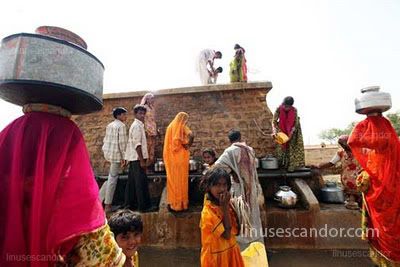
Rajasthani women fetching water from a well in Jaisalmer , India.

The barren desert terrain around Jaisalmer harbors some unexpected monuments, dating back from the Rajput era when the area lay on busy caravan routes. Six kilometers north of Jaisalmer, in the fertile area of Bada Bagh, a cluster of cenotaphs built in memory of Jaisalmer’s rulers stands mighty on a hill amidst a cluster of modern wind turbines. The green oasis below is where most of the area’s fruit and vegetables used to be grown.

Part 6 Manali

Tuesday, May 5, 2009

Amazing Journey to Incredible India - MANALI (Part 6)

Indian women carrying heavy loads of grass feeds in Manali, India.

Himachal’s main tourist resort, Manali, stands at the head of the Kullu Valley. Despite lying at the heart of the region’s highest mountain range, it remains easily accessible by road from the plains. It is a hill station situated at a height of 2050 meters ASL in the Himalayas. Situated on the Beas River, it is a popular tourist spot for Indians in summer and a magical, snow-covered place in winter. This is a very good place to chill out and relax. It has become increasingly popular with domestic tourist, giving rise to an eclectic mix of honeymooners, holiday makers, hippies, trekkers and traders.

Young schoolchildren taking a break at Himachal Pradesh, Manali India.

The Kullu Valley’s spectacular alpine scenery makes it perfect for trekking. Trails are long and steep, but more than repay the effort with superb views, varied flora and the chance to visit remote hill stations. Within striking distance of several major trailheads, Manali is the most popular place to begin and end treks. Other adventure sports worthy of trying in Manali are paragliding, mountain biking, skiing and rafting to name a few.Another place with spectacular views is the Solang Valley.


It is known for its summer and winter sports. The sports most commonly offered are parachuting, paragliding, skating and zorbing. Giant slopes of lawn comprise Solang Valley and provide it its reputation as a popular ski resort. A few ski agencies offering courses and equipment reside here and operate only during winters. Worthy of visiting also is Manali’s oldest shrine, the Hadimba Temple.Our stay in Manali was cut short by the influx of many domestic tourists making the streets and the town congested with people. This time we want some peace and quiet and the best thing to do is go to a place where we can achieve that. Mcleod Ganj in Dharamsala is the recommended location for us. Getting there means we had to endure an overnight bus trip once again through rugged and winding mountain roads.

Part 7  Mcleud Ganj

Friday, May 1, 2009

Amazing Journey to Incredible India - MCLEOD GANJ (Part 7)

McLeod Ganj is one of those places where sitting, chatting and philosophizing in restaurants is the favored activity. Tibetan dishes such as thukpa and momos are prominent, along with Chinese egg noodles, chow mein and stir-fry. Fresh baked Tibetan breads and cakes are widely available. The focal point of McLeod Ganj is its Bhuddist temple, ringed with spinning red and gold prayer wheels. Other Buddhist and Tibetan sites in McLeod Ganj include the Namgyal Monastery, the Tibetan Institute of Performing Arts, Gompa Dip Tse-Chok Ling (a small monastery), the Library of Tibetan Works and Archives, Gangchen Kyishong, Mani Lakhang Stupa, Nechung Monastery, Norbulingka Institute.

Tibetan Prayer flags at Himachal Pradesh mountains.

Home to the Dalai Lama and the Tibetan government in exile and starting point for some exhilarating treks into the Himalayas, Dharamsala, or more correctly, its upper ttown McLeod Ganj, is one of Himachal’s most irresistible destinations. Spread across wooded ridges beneath the rock faces of the Dhauladar Range, the town is divided into two distinct and separate sections, separated by twisting road and almost a thousand meters in altitude. Originally a British hill station, McLeod Ganj has been transformed by the influx of Tibetan refugees fleeing from their homeland. Tibetan influence here is very strong as evidence of temples, schools and monasteries. Many people visit India specifically to come here, and its relaxed and friendly atmosphere can make it a difficult place to leave.

Prayer Wheels pushed by an old woman at McLeod Ganj, Northern India.

Leaving this beautiful and serene place made us sad but we have to. We scheduled to go back to Delhi and endure the blistering heat once again. We had no other choice since our flight going back home is in there. Our stay in India is enough having visited a lot of places already. It’s not possible to see everything India has to offer in a single expedition, and we don’t suggest you try. We have covered a total distance of approximately more than 4,000 kilometers spread across seven cities in four states and seeing places you only see in books.
Rohtang Pass is a high mountain pass of the Himalayas some 51 km from Manali. It connects the Kulu Valley with the Lahaul and Spiti Valleys of Himachal Pradesh, India.

Even with all the beautiful places and interesting people we met there is also the downside of traveling in India. Rampant commercialism, hustling merchants, persistent touts and scams to make you scream with annoyance are just some to name a few. You have to have a strong guts and feeling before you decide to travel in this subcontinent.


Amidst the hassle and some disappointments, our trip in India can be described in two words, simply amazing. I never thought we can actually do this with our tight budget and limited time. You just have to enjoy every minute of it. The train travel, monuments and forts, the spicy foods and the people we met, all this add up to an experience that I will cherish for a lifetime. Every click of my camera captured the best life has to offer giving me more reason to practice and enhance my craft for the next generation to see. We came home not only with a hard drive full of memories but with a contented heart and a brand new outlook in life. I hope this experience will inspire many of our countrymen to travel the world and see things in a different perspective so we can appreciate our own country and love it more.

Wednesday, June 18, 2008

Backpacking South East Asia - Saigon (Part 4)


The next time I would cross the border would be to Ho Chi Minh City. I bought an bus ticket for 10USD. The trip from Phnom Penh to Ho Chi Minh City takes about 6 hours. At the proving of Neak Loeung,  around 60km from the capital the bus had to be ferried across the Mekong river.

At Ho Chi Minh City, I settled for an inn with a room that costs 6US Dollars a night with a single bed.  Though I would have preferred a cleaner bathroom at this point in my trip, the room came with cable tv and a fan.  Being in a city once again encouraged me to just kick back and relax, thats why I opted to arrange for a one day package tour just to take a break from the grueling bus rides I have been enduring the past days.  It turned out to be a rainy day tour that's why I decided to keep my lucky streak traveling alone and spend two more nights in Ho Chi Minh City.


The streets of Saigon are teeming with motorcycle riders.  There are scenic bus trips that will take you away from the bustling capital city to My Tho, one of the provinces at Mekong Delta.  I this point I have sort of fallen off the map and I am just aimlessly traveling to nearby towns.

The downside of going on a trip on a free plane ticket is I have to fly in and out of Bangkok.  So I retraced  my steps and found myself once again in the now familiar city of Bangkok.  As usual, instead of going on a tour package,  I decided to explore the area spending my transportation expenses the same way local Thais normally do.  Take for example, a package rate for a one day Ayutthaya  tour costs 450-1,000 Baht.  


However a backpacker can spend as low as 200 baht, which includes a round trip train ride to the province of Ayutthaya for not more than 60 baht, a 40 baht a day bicycle rental, a 3.50 baht to transfer the bike from the train station to the temples.  One should not hesitate to walk to certain temple sites like the Wat Arun (temple of dawn) and Wat Po (reclining Buddha).  Traveling in Thailand would not be complete without visiting the  famous floating market of Damoen Saduak.  


On a tight budget, I got  a two-week adventure in the Southeast, souvenir shirts, a bunch of gift items, a genuine Thai massage, incredible photographs and a wider perspective of the world.

Wednesday, June 11, 2008

Backpacking South East Asia - Phnom Penh (Part 3)

I bought a bus ticket to Phnom Penh for 7USD.  I left Seam Reap lunchtime and reached the capital at 6:28 in the evening,  covering a distance of 251 kilometers.  There where no delays along the way for we only have a stop for a short break.  Phnom Penh's tourist attractions for a tourist visit for there are a handful of tourist spots present.   I stayed in Phnom Penh for 2 days and stayed near the central market in a guest house spending 5US Dollars a night.


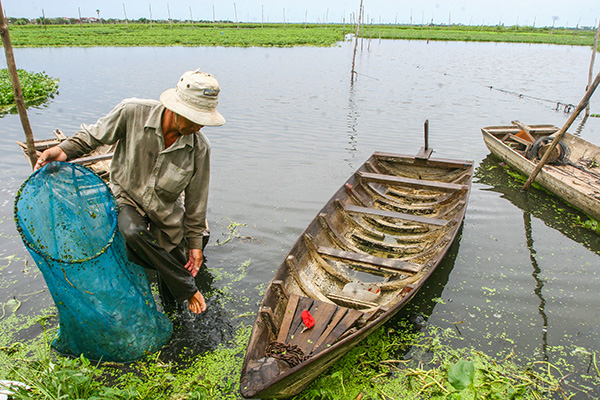
Cambodia’s Tonle Sap Great Lake is the largest freshwater floodplain lake in the world, increasing and decreasing in size annually . It is one of the places or one is with the more meadows of the Kampuchean everyday life and their reality.

One of Phnom Penh famous attractions is the gruesome reminder of the country's past. The famous "Killing Fields" of Cambodia's Cheong EK. Cheong Ek is at least 15 kilometers from the Central Market of Phnom Penh. In 1975 and 1978, as many as 17,000 Cambodians were tortured and killed. The event is immortalized in the movie "The killing fields".

One of Phnom Penh famous attractions is the gruesome reminder of the country's past. The famous "Killing Fields" of Cambodia's Cheong EK. Cheong Ek is at least 15 kilometers from the Central Market of Phnom Penh. In 1975 and 1978, as many as 17,000 Cambodians were tortured and killed. The event is immortalized in the movie "The killing fields".