Showing posts with label sari. Show all posts

Friday, May 22, 2009

Amazing Journey to Incredible India - VANARASI (Part 2)

After a long and arduous sixteen hours overnight train journey we reached the great Hindu city of Varanasi. Also known as Baranas or Benares, it stretches along the crescent of the River Ganges, its waterfront dominated by long flights of stone ghats where thousand of pilgrims and residents come for their daily rituals.
Washermen are seen washing clothes on the banks of river Ganges in the northern Indian city of Varanasi.
One of the highlights of the trip in Varanasi is the early morning boat ride along the River Ganges. From here you can see people bathing in the riverbanks. Century old pavilions and palaces, temples and terraces lined up with stone steps – the ghats – stretched along the whole waterfront, changing dramatically in appearance with the seasonal fluctuations of the river level.
Hindus regard the Ganges as amrita, the elixir of life, which brings purity to the living and salvation to the dead, but in reality the river is so polluted and full of effluent. Factory wastes increases the level of heavy metals to unacceptable proportion not to mention the floating human body parts.
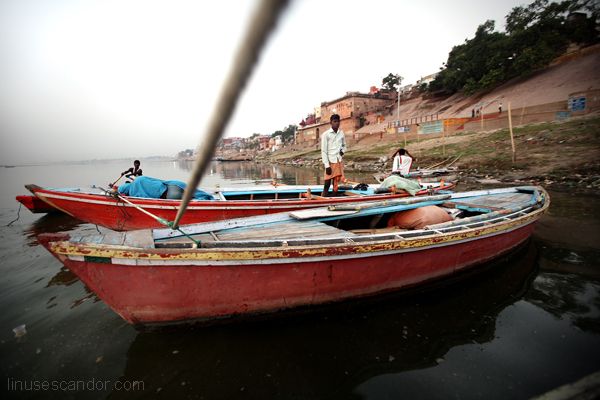
A man fishes at the banks of river Ganges in the northern Indian city of Varanasi.
Known to the devout as Kashi, the Luminous – the City of Light, founded by Shiva – Varanasi is one of the oldest living cities in the world. It has maintained its religious life since the sixth century BC in one continuous tradition, in part by remaining outside the mainstream of political activity and historical development of the subcontinent.
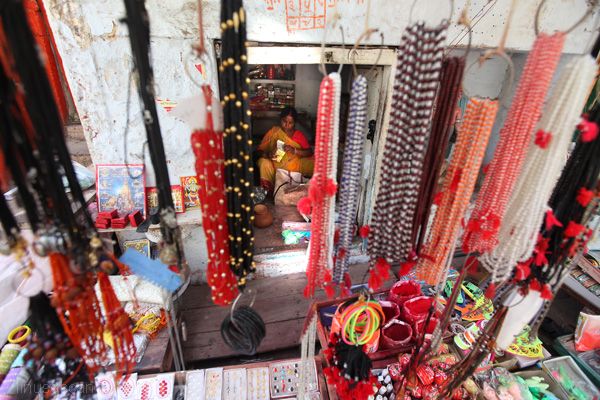
Assorted collection of beads, imitation jewelries are for sale along the gath.
Varanasi is among the holiest of all tirthas that allow the devotee access to the divine and enable gods and goddesses to come down to earth. 
Anyone who dies in Varanasi attains instant moksha or enlightenment. Widows and the elderly come here to seek refuge or to live out their final days, finding shelter in the temples and assisted by alms given by the faithful.


Part 3 Agra

Thursday, May 14, 2009

Amazing Journey to Incredible India - AGRA (Part 3)

Women wearing colorful saris outside the main entrance of Taj Majal, Agra India.
Agra is the capital of India under the Mughals, the splendor of which remains undiminished, from the massive fort to the magnificent Taj Mahal. It is the third apex of the “Golden Triangle”, India’s most popular tourist itinerary, along with Delhi and Jaipur in Rajasthan. Agra’s greatest days arrived during the reign of Akbar the Great, with the construction of Agra Fort. It is majestically built along the bend of the Yamuna River and is made of red-sandstone. His grandson, Shah Jahan, on the other hand built the Taj Mahal in memory of his wife Mumtaz Mahal (“Chosen One of the Palace”) who died shortly after giving birth to her fourteenth child.
Kids crossing the Yamuna river, Agra India.
Agra is the capital of India under the Mughals, the splendor of which remains undiminished, from the massive fort to the magnificent Taj Mahal. It is the third apex of the “Golden Triangle”, India’s most popular tourist itinerary, along with Delhi and Jaipur in Rajasthan. Agra’s greatest days arrived during the reign of Akbar the Great, with the construction of Agra Fort. It is majestically built along the bend of the Yamuna River and is made of red-sandstone. His grandson, Shah Jahan, on the other hand built the Taj Mahal in memory of his wife Mumtaz Mahal (“Chosen One of the Palace”) who died shortly after giving birth to her fourteenth child.
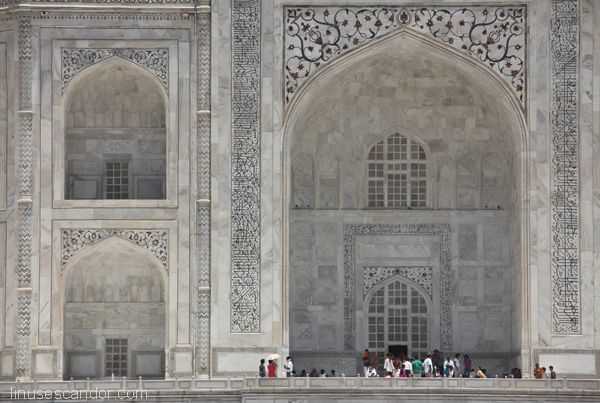
The purest white marble, inlaid with mosaics of precious stones of the walls of Taj Majal, Agra India.
The magic of the monument is strangely undiminished by the crowds of tourists who visit, as small and insignificant as ants in the face of the immense mausoleum. That said, the Taj is as it’s most alluring in the relative quiet of early morning, shrouded in mist and bathed with a soft red glow. As its vast marble surfaces fall into shadow or reflect the sun, its color changes, from soft grey and yellow to pearly cream and dazzling white. This play of light is an important decorative device, symbolically implying the presence of Allah, who is never represented in physical form.

Part 4 Jaipur